
Access beyond barriers
Families of children and individuals with autism and other disabilities often spend months searching for medical and dental professionals who are trained, equipped, available, and willing to provide appropriate care. Together, we can document these barriers, connect families with resources, and advocate for a system that funds the time and accommodations every patient deserves.
Initially serving families across New Jersey and New York.

Families should not have to call dozens of offices to find one that can help.
Limited Providers
Too few practices have the training, staffing, or facilities required to support patients with complex needs.
Insurance Barriers
Families may find a provider, only to learn that the office does not accept their Medicaid plan or insurance.
Long Waitlists
Specialty clinics and hospital programs may have limited appointments, leaving families without timely preventive care.
Underfunded Accommodations
Sensory tools, adaptive equipment, extended appointments, desensitization visits, and additional staff require proper funding.
Verified statistics area.No numbers are shown here yet. Administrators can add reviewed statistics with a visible source citation through the content editor.
The problem
What makes care so difficult to access?
An ordinary appointment may require extraordinary preparation. A patient may need additional time, a quiet waiting area, gradual introductions to equipment, visual communication tools, caregiver participation, adaptive positioning, sedation, or a team trained in developmental and behavioral care. However, reimbursement and office systems do not always account for these needs.
These barriers do not mean that patients are incapable of receiving care. They mean the healthcare system has not been adequately designed or funded to include them.
Accommodations
What appropriate care can look like
Accessible care is usually made of ordinary, practical adjustments — planned in advance and properly funded.
- Longer or flexible appointments
- Pre-visit planning with caregivers
- Quiet waiting options
- Gradual desensitization visits
- Visual schedules and social stories
- Communication boards or devices
- Dimmed lights and reduced noise
- Sensory tools and comfort items
- Wheelchair-accessible equipment
- Trained clinical and administrative staff
- Caregiver participation
- Sedation or hospital-based treatment when clinically appropriate
- Clear insurance navigation
- Coordinated referrals and follow-up
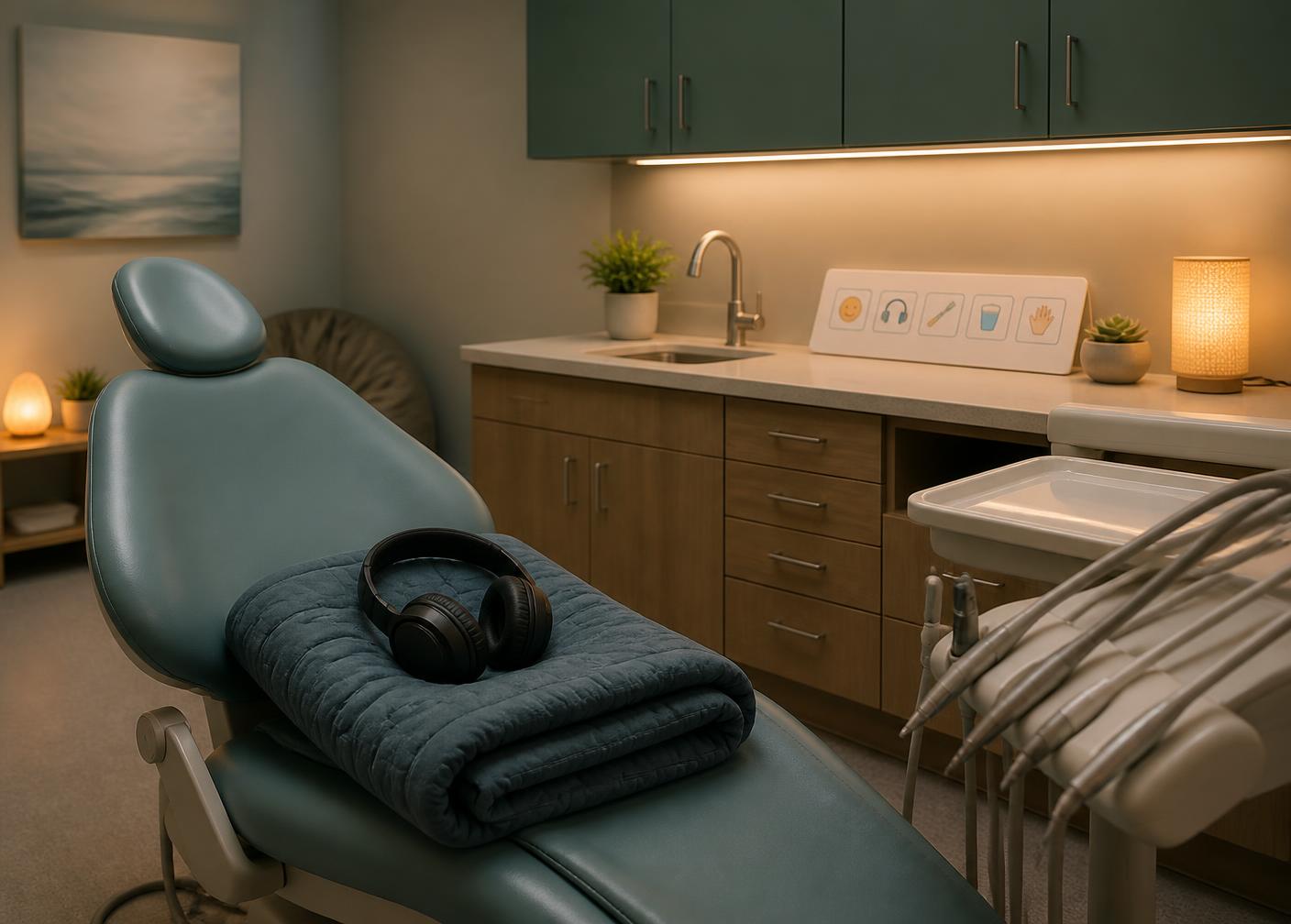
Accommodations should always be individualized. No single approach is appropriate for every autistic or disabled patient.
The data so far
How long families wait for medical and dental care
Every figure below is anonymous and combined across all survey responses. Individual answers, names and locations are never shown.
Stories
Stories
Anonymous experiences shared by families searching for medical and dental care.
Every story is reviewed by an administrator before it appears here. All submission information is visible to authorized administrators. Stories submitted through the survey with permission to publish will be posted once approved. Only the patient's age, state, and written responses are shown publicly — never names, contact details, or specific organization names. These stories are shared to raise awareness and improve healthcare access, not to criticize or blame any individual provider or organization.
Resources
Find medical, dental, and family-support resources
Initially serving families across New Jersey and New York.
This directory is provided for informational purposes. A listing does not guarantee appointment availability, insurance participation, Medicaid acceptance, age eligibility, referral eligibility, or a specific type of treatment. Contact each organization directly to confirm current information.
Our goals
What we are asking the healthcare system to change
Fair and realistic reimbursement
Review Medicaid and insurance fee schedules so reimbursement reflects extended appointment time, additional staff, pre-visit planning, caregiver coordination, specialized training, sensory accommodations, adaptive equipment, and clinically necessary sedation or hospital care.
More participating providers
Create incentives for additional medical and dental providers to accept Medicaid and serve patients with developmental disabilities and complex support needs.
Training throughout healthcare
Expand disability-responsive education in medical schools, dental schools, residency programs, continuing education, hospitals, community clinics, and private practices.
Funding for accommodations
Provide grants or reimbursement pathways for sensory equipment, communication materials, wheelchair-accessible treatment equipment, quiet spaces, desensitization visits, and other reasonable accommodations.
Transparent provider directories
Maintain accurate directories showing which practices are accepting patients, which ages they serve, which insurance plans they accept, and which accommodations they provide.
About us
Why we started
This movement began after seeing how difficult it can be for families to locate medical and dental professionals who are prepared to care for patients with special needs, specifically profound autism. What should be a basic healthcare appointment can become a months-long search involving repeated calls, insurance confusion, referrals, travel, and rejection.
We created this platform to make those experiences visible, connect families with existing resources, and build support for practical policy changes. Our goal is not to blame individual providers or policymakers. It is to address patient concerns and provider concerns in regard to reimbursement, provider education, staffing, equipment, and other system-level barriers, and to bring them directly to policymakers who can change them.
Founded by Evannie Tejada, Poonam Gat, and the Support Special Needs team.
About the organization
Support Special Needs was founded by Dr. Poonam Gat, Owner and General Dentist of Children's Dental Care. Through years of caring for children with autism and other special needs, she recognized the need for greater access to quality healthcare and created this initiative to advocate for meaningful change.
Evannie Tejada serves as an Advocacy Intern for the initiative, supporting community outreach, raising awareness, connecting families with resources, and helping amplify the voices of individuals with special needs and their caregivers.
Questions
Frequently asked questions
Care should be accessible before a condition becomes an emergency.
Share an experience, locate a resource, or help bring these barriers to the attention of the people who can change them.