
The problem
Why families struggle to find medical and dental care
Access barriers are rarely caused by a single office saying no. They are the result of reimbursement, training, staffing, equipment, and coordination gaps that repeat across the entire healthcare system.
Families should not have to call dozens of offices to find one that can help.
Limited Providers
Too few practices have the training, staffing, or facilities required to support patients with complex needs.
Insurance Barriers
Families may find a provider, only to learn that the office does not accept their Medicaid plan or insurance.
Long Waitlists
Specialty clinics and hospital programs may have limited appointments, leaving families without timely preventive care.
Underfunded Accommodations
Sensory tools, adaptive equipment, extended appointments, desensitization visits, and additional staff require proper funding.
Verified statistics area.No numbers are shown here yet. Administrators can add reviewed statistics with a visible source citation through the content editor.
The problem
What makes care so difficult to access?
An ordinary appointment may require extraordinary preparation. A patient may need additional time, a quiet waiting area, gradual introductions to equipment, visual communication tools, caregiver participation, adaptive positioning, sedation, or a team trained in developmental and behavioral care. However, reimbursement and office systems do not always account for these needs.
These barriers do not mean that patients are incapable of receiving care. They mean the healthcare system has not been adequately designed or funded to include them.
Accommodations
What appropriate care can look like
Accessible care is usually made of ordinary, practical adjustments — planned in advance and properly funded.
- Longer or flexible appointments
- Pre-visit planning with caregivers
- Quiet waiting options
- Gradual desensitization visits
- Visual schedules and social stories
- Communication boards or devices
- Dimmed lights and reduced noise
- Sensory tools and comfort items
- Wheelchair-accessible equipment
- Trained clinical and administrative staff
- Caregiver participation
- Sedation or hospital-based treatment when clinically appropriate
- Clear insurance navigation
- Coordinated referrals and follow-up
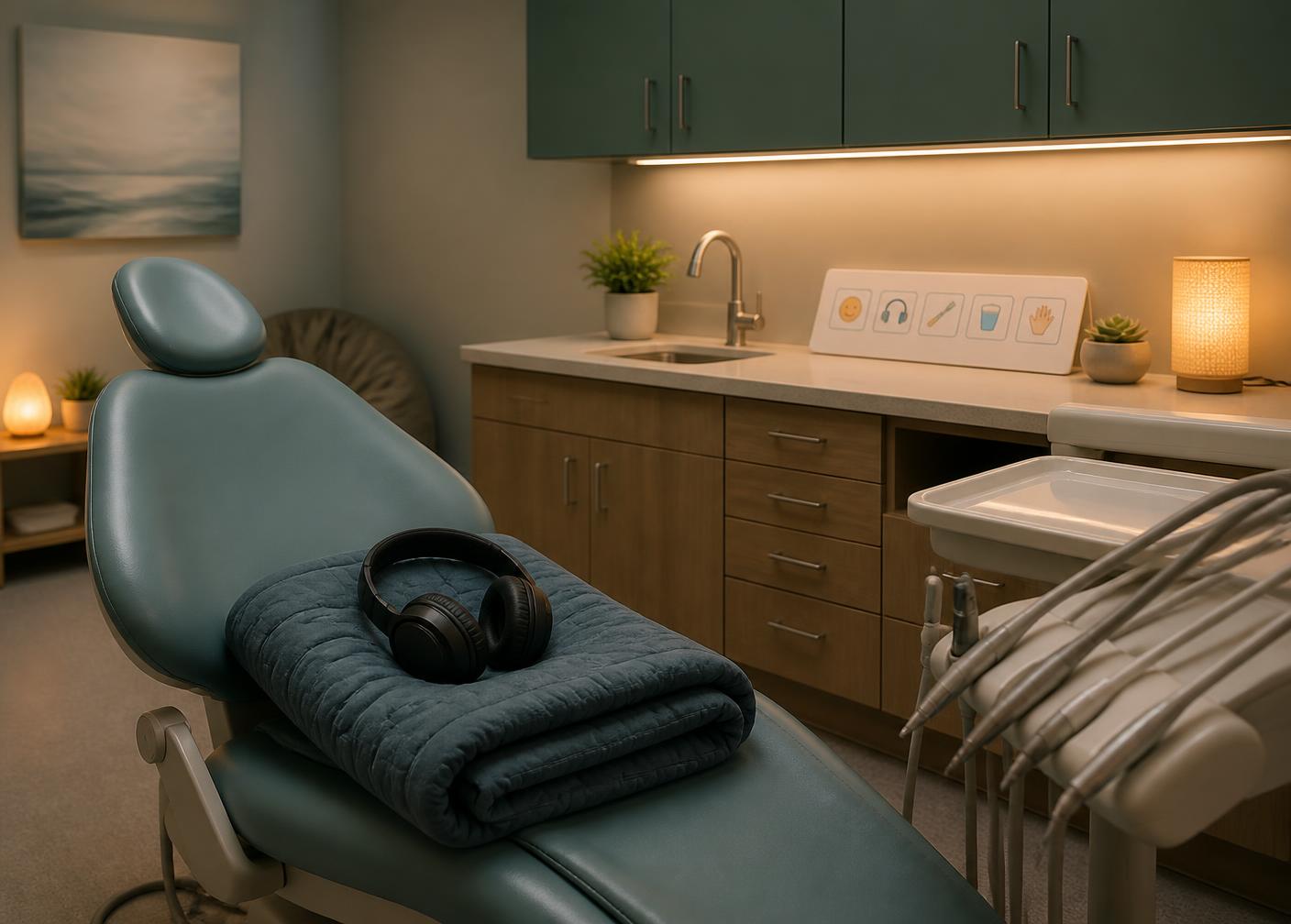
Accommodations should always be individualized. No single approach is appropriate for every autistic or disabled patient.
Care should be accessible before a condition becomes an emergency.
Share an experience, locate a resource, or help bring these barriers to the attention of the people who can change them.